



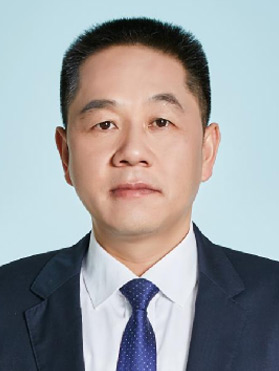
Zhiming XU/ Executive Director, Dean of School of Clinical Medicine
Clinical Professor, Future Medical Center;
E-mail:xuzhiming@suat-sz.edu.cn
Personal Profile
Zhiming Xu, male of Han ethnicity, born in Suzhou, Jiangsu in October 1973, Chinese national, holds a doctoral degree. Prof. Xu is a Chief Physician, Professor and doctoral supervisor, and joined the Communist Party of China in April 1994. Currently, Prof. Xu serves as Distinguished Professor of the School of Pharmacy and Director of General Hospital, Shenzhen University of Advanced Technology. Prof. Xu has long been engaged in clinical medical work, with a main research focus on liver transplantation and complex hepatobiliary surgery. As a student of Academician Wu Mengchao, he completed 100 liver transplantation operations during his tenure at Changhai Hospital of the Naval Medical University and the First Affiliated Hospital of Soochow University, with a postoperative survival rate of 40%. During his work at the 117th Hospital and the 301st Hospital of the PLA, he was mainly engaged in the detection, protection, traditional Chinese and Western medicine diagnosis and treatment, as well as rehabilitation of nuclear radiation exposure among young servicemen, making positive contributions to maintaining the combat capability of the military. During his tenure at the University of Chinese Academy of Sciences, he jointly established 6 joint laboratories with the 301st General Hospital of the PLA. He has presided over dozens of scientific research projects funded at national, provincial, municipal and military levels. He has published more than 200 high-quality papers at home and abroad and authored over 10 monographs. He has been awarded 6 First and Second Prizes of the Military Science and Technology Progress Award, and 2 Second and Third Prizes of the National Science and Technology Achievement Award.
Educational Background
- Educational Background:
-
2015/09 - 2019/12Ph.D. in Radiology Medicine, Soochow University
-
2011/09 - 2012/07Doctoral Course Program in Clinical Medicine, Second Military Medical University
-
1999/09 - 2002/07Master's Degree in Clinical Medicine, First Military Medical University
-
1990/09 - 1995/07Bachelor's Degree in Clinical Medicine, Zhenjiang Medical College
- Professional Experience:
-
2018/12 - PresentFounding President, General Hospital, Shenzhen University of Advanced Technology; concurrently Chief Physician, Oncology Center, PLA General Hospital (301 Hospital)
-
2016/09 - 2018/12Leader of the Preparatory Group, School of Clinical Medicine, University of Chinese Academy of Sciences; Professor; concurrently Chief Physician, Oncology Center, PLA General Hospital (301 Hospital)
-
2014/11 - 2016/09Dean, PLA 117 Hospital (Hangzhou); Senior Colonel
-
2012/10 - 2014/11Dean, PLA 100 Hospital (Suzhou)
-
2008/10 - 2012/10Associate Chief Physician, Department of General Surgery, The First Affiliated Hospital of Soochow University; concurrently Vice Dean, PLA 100 Hospital (Suzhou)
-
1995/09 - 2008/10Attending Physician, then Associate Chief Physician, Department of General Surgery, Changhai Hospital, Shanghai
Research Areas
1.Ultra-early diagnosis of liver cancer and other tumors using non-invasive approaches such as imaging, circulating tumor cell detection, and flora metabolomics analysis; comprehensive treatment of advanced liver cancer, and research on immune microenvironment and novel drug targets.
2.Screening of anti-tumor drugs through molecular biology and synthetic biology methods, and elucidation of their mechanisms of action, drug delivery efficiency, pharmacodynamics/pharmacokinetics, and toxicology.
3.Clinical GCP (Good Clinical Practice) research on anti-tumor drugs, stem cell therapy, and high-tech medical devices.
4.Prediction of tumor screening and immunotherapy by flora, and the effect of traditional Chinese medicine-based regulation of the tumor microenvironment on immunotherapy efficacy.
5.Research and development as well as clinical validation of novel anti-tumor and anti-bacterial materials and biological agents. Teaching: Clinical vs. basic research correlation, clinical medicine and imaging comparison, and courses in medicine, health, wellness, and life sciences.
Awards and Honors
Awards and Honors:
1.Member of the Standing Committee of the 12th All-China Youth Federation, Chairman of the Medical and Health Sector;
2.Deputy Chairman of the General Surgery Group, Military Health Care Committee of the PLA;
3.Deputy Group Leader of the Hepatology Group, General Surgery Committee of the Chinese Medical Association;
4.Review Expert for the Rising Star Program of the former General Logistics Department of the PLA;
5.Academic Leader of the PLA 122 Talent Project.
Research Projects:
1.2016/12–2021/12, Principal Investigator, Project of Jiangsu Provincial Department of Science and Technology, Construction of South China Genetic Resources Research Center, Chinese Academy of Sciences (BM2016034), 30 million RMB, Completed.
2.2022/10, Project Leader, Major Technological Breakthrough Project of Shenzhen Science and Technology Innovation Commission, R&D and Application of Key Technical Platform for Point-of-Care Testing (POCT) (Project No. Chong2022D013) (Shenzhen Sci-Tech Innovation Grant [2022] No. 50), 3 million RMB, Ongoing.
3.2023/12, Principal Investigator, Major Key Technology Project of Shenzhen Science and Technology Innovation Commission, R&D of Plasma Tumor Conformal Ablation System (Shenzhen Sci-Tech Innovation Grant [2023] No. 92), 1.5 million RMB, Ongoing.
4.2024/1, Core Principal Investigator, Research Project of Shenzhen Medical Academy, Immune Editing Mechanism of Plasma on Tumor Microenvironment and Its Clinical Application (Clinical Medicine Special Project No. C231011), 2 million RMB, Ongoing.
5.2022/10, Core Principal Investigator, Horizontal Project commissioned by Miaoshun Biotechnology Co., Ltd., Collection of Peripheral Blood Leukocytes for New Drug Discovery and Preclinical Research of Immunotargeted Drugs for Various Tumors, 3 million RMB. Project ongoing.
Publications:
[1] Xu, Z., Wang, Y, Han, J., Xu, Q., Ren, J., Xu, J., Wang, Y, Chai, Z., 2018. Noninvasive Multimodal Imaging of Osteosarcoma and Lymph Nodes Using a 99mTc-Labeled Biomineralization Nanoprobe. Anal Chem 90, 4529–4534.
[2] Chen, Q., Xia, M., Tang, M., Liu, M., Yan, D., Chen, W., Xu, S., Xu, Z., Chen, Y.H., Zhang, G., Wan, X., Zhu, W.-G., 2025. DR5 CAR-NK cells demonstrate superior scalability and potent antitumor activity with favorable safety. Mol Ther 33, 6063–6081.
[3] Ibrahim, A., Mohamady Farouk Abdalsalam, N., Liang, Z., Kashaf Tariq, H., Li, R., O Afolabi, L., Rabiu, L., Chen, X., Xu, S.#, Xu, Z.#, Wan, X.#, Yan, D.#, 2025. MDSC checkpoint blockade therapy: a new breakthrough point overcoming immunosuppression in cancer immunotherapy. Cancer Gene Ther 32, 371–392.
[4] Khan, I., Fang, Q., Fei, C., Wang, Z., Chen, Z, Chen, G., Xu, Z.#, Xu, S#., Chen, Z#, Cold atmospheric plasma-mediated tumor microenvironment remodeling for cancer treatment. BMEMat, e70041.
[5] Ling, Y., Hu, M., Zeng, Y., Mao, Q., Deng, W., Ben, Y.#, Andrews, C.B., Xu, Z.#, Wong, M.H., Zheng, C., 2025. Characterizing human exposure to multi-class antibiotics through urine biomonitoring in a Chinese population. Emerging Contaminants 11, 100587.
[6] Niu, X., Zhang, P., Liu, Z., Tang, Y., Xu, S., Wan, X., Xu, Z.#, Zhang, G.#, 2025. Lentinan enhances CAR-T cell potency in solid tumors by optimizing T cell differentiation. Frontiers in Immunology.
[7] Rabiu, L., Zhang, P., Liu, Z., Tang, Y., Gidado, K.I., Ibrahim, A., Saliu, M.A., Tariq, H.K., Wan, X., Xu, S.#, Xu, Z.#, Zhang, G.#, 2025. TIPE2 deficiency amplifies inflammation and immune dysregulation in MASH through modulating hepatic lipid metabolism and immune cell function. Inflamm Res 74, 65.

- Address: No. 1 Gongchang Road, Guangming District, Shenzhen
- Career Opportunities:recruit@suat-sz.edu.cn
- Party and Administration Office:0755-88802131
- Main line:0755-88802999


版权所有: 深圳理工大学粤ICP备2021148220号 粤公网安备44030002008114号