Editor's Note

This summer, many Shenzhen University of Advanced Technology(SUAT) students either immersed themselves in labs conducting experiments with mentors, engaged in social practice and industry surveys, or visited prestigious international universities for exchanges... truly living a"high-energy"summer.
Today's second edition of the "High-Energy Summer at SUAT" column takes you to learn how 2024 undergraduate Chen Jingzhi immersed himself in a multimodal AI project—come and follow along!
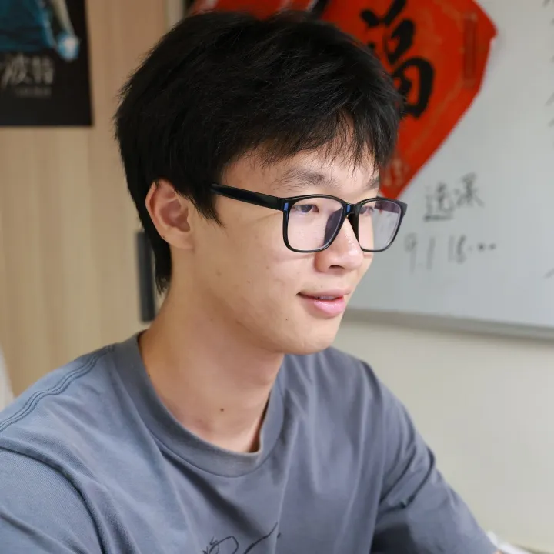
Chen Jingzhi
2024 Undergraduate atSUAT
From Monday to Thursday, I sit in classrooms studying theoretical courses, and on Fridays, I dive into labs for research practice—my freshman life has been both rich and fulfilling. I successively entered neuroscience labs to observe EEG signal analysis, learned gene sequencing data processing on biotechnology platforms, and joined computer research groups to try building and optimizing algorithm models. After a year of rotations, I discovered I'm better at solving complex problems through active thinking and logical reasoning, gradually clarifying the intersection of my personal abilities and professional interests.
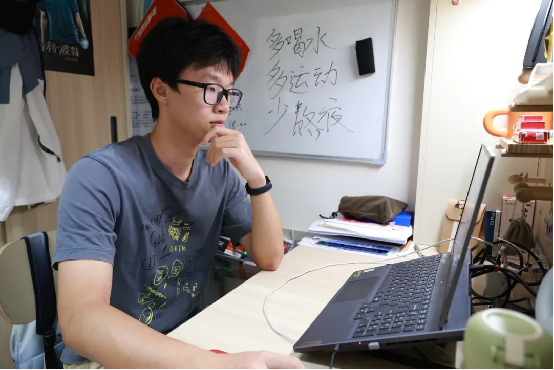
Thus, when choosing my sophomore major, after repeated comparisons among neuroscience, biotechnology, and computer science and technology—the three fields that interested me—I firmly selected computer science and technology as my core development direction.This summer, I chose to stay on campus and follow my computer science mentor, Professor Xu Lijian, truly diving into an AI project.
Professor Xu Lijian and I set a "small goal": Build an efficient pre-training model for multimodal images and text in three weeks. Afterward, I maintained at least three online discussions with him almost every week, and several times we met face-to-face at school during lunch. We discussed papers, evaluated models, and dug for innovation points; he often shared literature reading methods and practical cases from the research group—this feeling of being personally guided into research is something no theoretical class can offer.
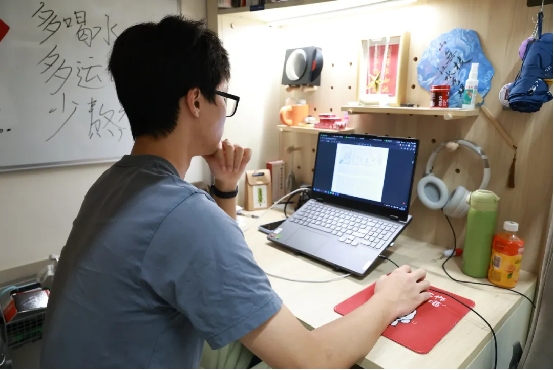
I deeply experienced the real scenario of"learning through research" with the group: The Transformer and multimodal fusion models taught in class require solving heterogeneous modality alignment problems between images and text in practice; knowledge distillation and model compression techniques from literature were used to improve efficiency and reduce costs. Through systematic reading of top journal papers, regular group reports and reproduction discussions, and multiple rounds of experimental validation strategies, the team ultimately successfully built an efficient multimodal pre-training model prototype—significantly reducing training time and resource consumption while ensuring diagnostic accuracy.
What particularly moved me was the open and mutually supportive atmosphere of the entire research group. Senior brothers and sisters proactively helped me set up the environment, and the professor promptly guided key ideas and clarified technical routes. "First, cultivate independent thinking ability; second, dare to ask questions—the mentor's guidance allows students to understand professional knowledge faster and more deeply. " Professor Xu Lijian's advice deeply inspired me. I am no longer just a "listener" but someone truly participating in advancing a project.
Experiencing the complete closed loop of "conception-verification-optimization," I understood how AI technology lands in medical scenarios and became more determined to take "efficient and trustworthy multimodal AI" as my future research direction.
After this summer's training, I also have a clear plan for sophomore life: Academics are the foundation of research—solid theory provides underlying support for research; problems encountered in research will drive me to actively deepen classroom knowledge, forming a virtuous cycle of mutual promotion. I plan to excel in core courses like "Probability Theory and Mathematical Statistics" and "Principles and Applications of Large Language Models" while deeply participating in the group's follow-up project development.
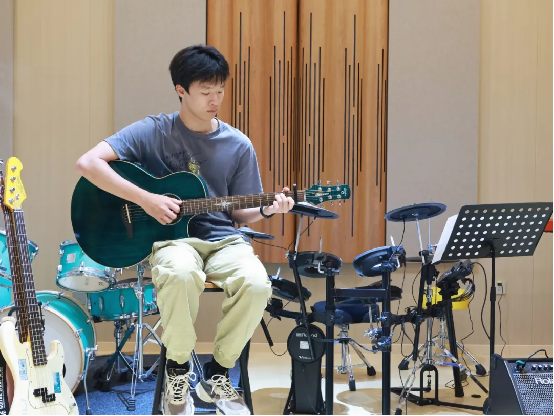
In my spare time, I like playing soccer and music. As president of the Dawning College soccer club, I plan to expand club activities across the university and build a cross-college sports exchange platform; I am also the guitarist in the college band, intensively rehearsing with teammates for the university anniversary performance.
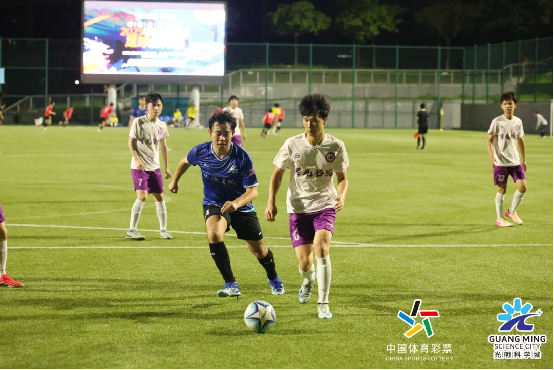
In my view, computer science, soccer, and guitar do not conflict. The logical thinking of computer science, team collaboration in sports, and personal expression in music creation are essentially interconnected—all ways of creation and expression that keep my thinking active and open.I also hope to meet more like-minded people in research and interests, letting academics, research, and life mutually enhance each other.
Looking back, SUAT provides me not just a "lab seat" but a virtuous ecosystem of"research-learning-life." From freshman rotations, to immersive summer research, to now having a clear path ahead—I am increasingly convinced that this is the best starting point for exploring the world and heading toward the future.
Dear SUATers
How did you spend your summer?
Welcome to share with us!
Submission Email:
wangzhikang@suat-sz.edu.cn
Deadline:
September 21, 2025, 18:00
 CN
CN