ACM BCB24 Academic Annual Meeting
From November 22 to 25, theACM Conference on Bioinformatics, Computational Biology, and Health Informatics 2024(ACM BCB), sponsored by the Association for Computing Machinery (ACM) and co-hosted by Shenzhen University of Advanced Technology (SUAT)and the Shenzhen Institutes of Advanced Technology, Chinese Academy of Sciences, was successfully held in Shenzhen.
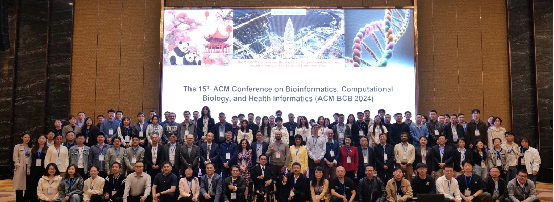
ACM BCB is an important international academic forum for interdisciplinary research, andthis annual meeting is the first time in 15 years that it has been held outside the United States.SUAT Party Secretary Zhu Dijian attended the opening ceremony and delivered a speech, while Professor Pan Yi, Dean of the SUAT Faculty of Computing Science and Control Engineering, served as co-chair of the conference. The conference attracted 211 experts, scholars, and industry elites in bioinformatics from 13 countries, accepting 35 full papers, 36 short papers, 36 posters, 6 workshops, 2 tutorials, and 2 highlights.
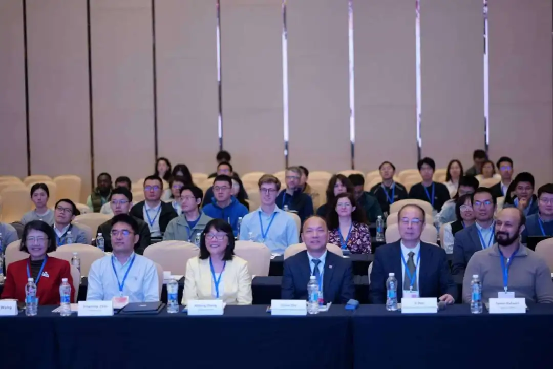
In the opening speech, Zhu Dijian mentioned that as one of the first new-type research universities, SUAT focuses on exploring university construction in new concepts, new directions, new methods, and new conditions, forming distinctive features of"running the university through integration of industry and education as well as science and education," building interdisciplinary programs, and cultivating talents through the integrated model of three academies.Adhering to "small but refined" education, student cultivation emphasizes quality over quantity, discipline construction focuses on strength rather than comprehensiveness, striving to gather core strengths in subdivided directions to participate in international competition; building a first-class faculty team is regarded as the key to building a first-class university, and SUAT has now assembled a high-level faculty team primarily composed of high-level overseas talents. The university conducts elite cultivation for undergraduates through "academic track, engineering track, and entrepreneurship track," aiming to teach according to aptitude and cultivate practical top innovative talents.
He expressed hope that through this ACM BCB conference, a high-level and international exchange platform will be built to promote in-depth exchanges and cooperation between domestic and international scholars, jointly addressing challenges in the field of biological computing; he sincerely welcomed scholars to engage in close industry-academia-research cooperation with SUAT, jointly exploring the mysteries of life sciences and contributing to human health and social development.
The conference also specially invited 5 Keynote Speakers
who delivered wonderful speeches around the conference theme
sharing the latest research achievements and development trends in their respective fields
bringing a high-level academic feast to the attendees
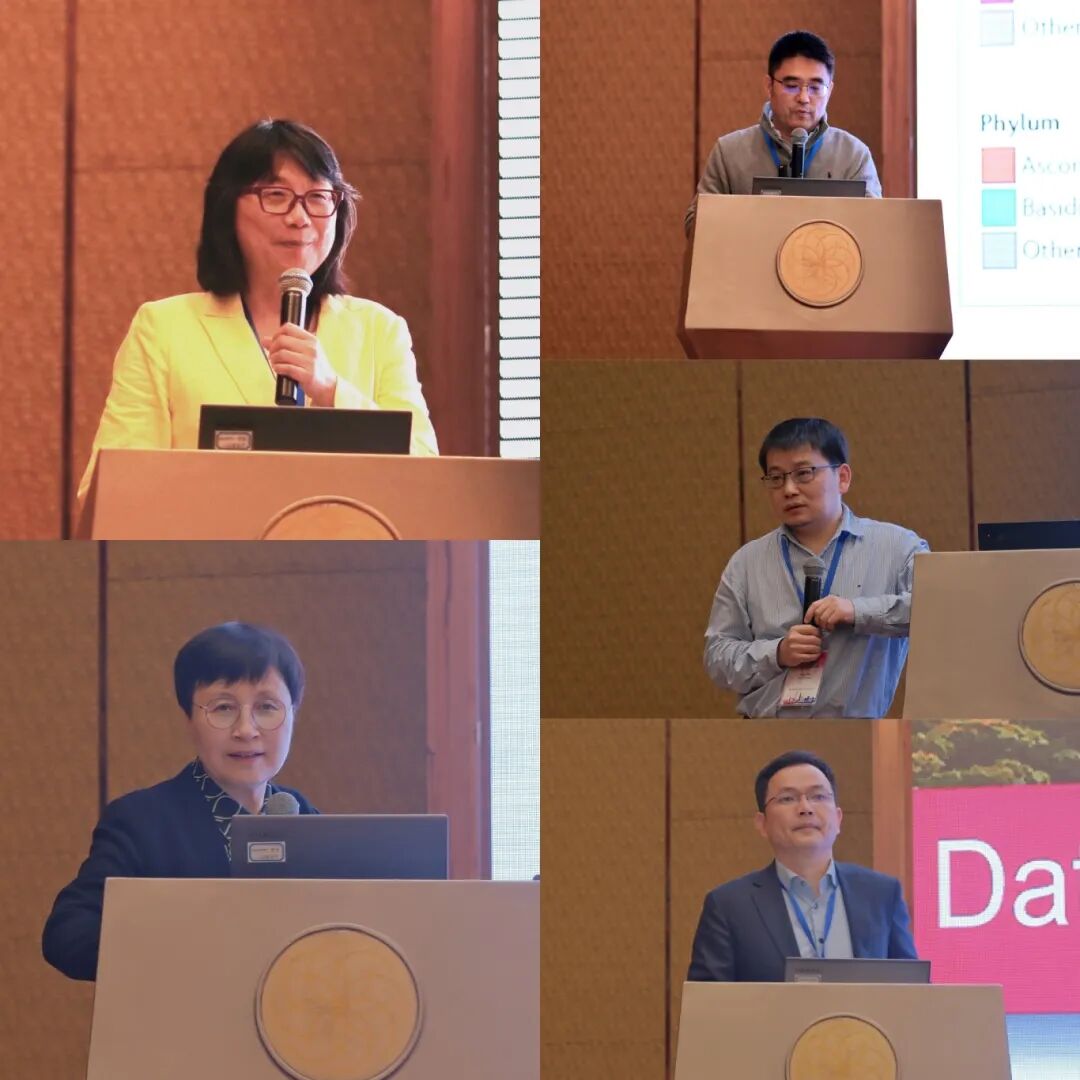
Professor Zhang Aidong from the University of Virginia delivered a speech on the theme"Large Language Models for Scientific Hypothesis Generation," providing the latest solutions to two problems: how to effectively utilize parameterized knowledge embedded in foundation models to drive scientific discovery, and how to develop rigorous and scalable methods to evaluate the effectiveness of foundation models in supporting scientific research.

Professor Gao Lin, Director of the CCF Bioinformatics Professional Committee, delivered a speech on the theme"Models and Algorithms for Single-cell Multi-omics Data Analysis." She addressed how to deeply understand cell functions described by single-cell data and how to model related biological problems through the complementary features of multi-omics data, introducing her research work in multi-batch data integration, cell type decomposition, cell-cell interactions, and tissue cell neighborhood discovery.

Professor Zhao Xingming, Deputy Dean of the Brain-Inspired Intelligence Science and Technology Research Institute at Fudan University, delivered a speech on the theme"AI Driven Exploration of Human Microbiome,"introducing the latest research using long-read sequencing technology to explore the human gut microbiome, as well as some algorithms and tools developed for analyzing the human microbiome. At the same time, Zhao Xingming also showcased some new discoveries in gut fungal types (enterotypes) and associations between the gut microbiome and diseases.

Professor Pan Gang, Director of the State Key Laboratory of Brain-Machine Intelligence at Zhejiang University, delivered a speech on the theme"Cyborg Intelligence: Towards Convergence of the Brain and Machines," exploring cyborg intelligence. This is a new form of artificial intelligence originating from brain-machine interfaces, expected to enhance, repair, or extend the intelligence capabilities of biological and computational units. Pan Gang also shared related issues and challenges in this field, as well as his team's latest research progress.

Professor Li Jianqiang, Executive Director of the National Engineering Laboratory for Big Data System Computing Technology at Shenzhen University, delivered a speech on the theme"Data-Driven Intelligent System Perception and Decision," sharing research on network collaborative perception, collaborative network construction, and intelligent system optimization analysis and decision-making, and introducing how related research achievements are applied to special monitoring robots and medical health intelligent monitoring systems.
At the conference, Professor May D. Wang, Chair of the Steering Committee, announced that the 16th ACM Conference on Bioinformatics, Computational Biology, and Health Informatics (ACM BCB 2025) will be held in Philadelphia, USA, tentatively scheduled forSeptember 2025. The co-chairs of ACM BCB 2025 are Professor Xinghua Mindy Shi (Temple University) and Professor Xiaoning Qian (Texas A&M University). Experts and scholars are welcome to continue paying attention and supporting it.
 CN
CN