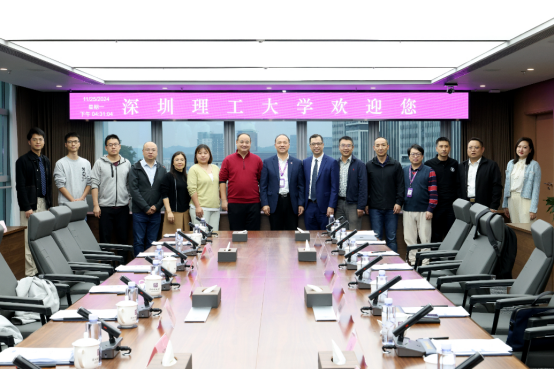
Recently, Shenzhen University of Advanced Technology(SUAT) invited more than 20 scholars from China and Singapore in fields such as pathology, bioinformatics and artificial intelligence, and spatial omics technology development to conduct strategic consultations onhow to advance spatial multidimensional omics and next-generation molecular pathology diagnosis.

In July this year, the China Association for Science and Technology released the 2024 Top 10 Engineering and Technical Challenges selected and evaluated by 129 academicians and experts, one of which was "Spatial Multidimensional Omics Guiding the Innovation of Next-Generation Molecular Pathology Diagnosis" proposed by Professor Cao Gang's team from the SUAT College of Life and Health Sciences and recommended by the Chinese Neuroscience Society.

Cao Gang stated that this work ranked among the 2024 Top 10 Engineering and Technical Challenges because analyzing the spatial distribution patterns of life macromolecules between cells and tissues and their association characteristics with disease occurrence and development is an important scientific issue related to the R&D of next-generation innovative drugs and new diagnostic tools. However, traditional molecular pathology technologies have issues such as single detection indicators, low throughput, and low resolution, which not only make diagnosis inefficient and overall expensive but also unable to explore the full picture of pathological tissue microenvironments from multiple dimensions and difficult to efficiently mine new drug targets and diagnostic markers. Therefore, there is an urgent need to develop new series of spatial multidimensional omics technologies, products, and instruments to achieve in situ detection of multiple life macromolecules and mapping of molecular spatial atlases at the tissue and cell levels, such as DNA, RNA, and proteins.
"On one hand, we can use single-cell spatial omics technology to mine new disease diagnostic molecular markers and therapeutic targets; on the other hand, we can carry out translational development of next-generation molecular pathology technology to provide a new generation of molecular pathology tools for precise diagnosis and personalized medicine. " Cao Gang further explained that through the application of spatial multidimensional omics in molecular pathology, it can also assist in mining drug targets and precise diagnostic markers from new dimensions and perspectives. "It can be said that spatial multidimensional omics technology not only reaches the academic pinnacle and belongs to the frontier of science and technology but can also be industrialized and used for clinical diagnosis. Currently, China's research in this area has reached a stage of running parallel with international levels. "
It is introduced that spatial multidimensional omics technologies are mainly divided into three categories: spatial transcriptomics combined with next-generation sequencing, spatial transcriptomics capturing target molecules by in situ hybridization, and spatial transcriptomics based on in situ sequencing. Chinese scholars have conducted related research and industrial translation on these three main technical paths, such as the π-FISH and MiP-Seq technologies from Cao Gang's team.
Cao Gang stated that spatial multidimensional omics and next-generation molecular pathology diagnosis still face some problems, such as various spatial omics methods being in early development stages, decoupling of spatial multidimensional omics from next-generation molecular pathology diagnosis research, and certain gaps between China and international large enterprises and research teams in original spatial multidimensional omics technologies, urgently requiring the integration of multidisciplinary teams for organized tackling and greater support in related policies and funding. "At this strategic consultation meeting, scholars provided good suggestions from their respective research fields for the future development direction of this work, especially on how to achieve clinical implementation. Next, we will revise and improve the proposal based on everyone's opinions to provide reference for relevant departments' strategic decisions on this work. "
Cao Gang's team began developing original single-cell spatial genomics, spatial multimodal omics, and other biotechnologies in 2013, as well as their applications in neural connectomics and neuro-immunology, with related research published in journals such as Nature Genetics, Neuron, and Nature Reviews Neuroscience. Next, they will further develop and apply spatial multidimensional omics technologies, particularly integrated spatial multimodal neural network information analysis with connectomics, neuro-tumor immune microenvironment, and next-generation molecular pathology diagnosis technologies.
It is understood that since 2018, the China Association for Science and Technology has organized the collection and release of major scientific and technological problems and challenges, guiding vast numbers of scientific and technological workers to closely follow global technology development trends, focus on major national needs, conduct original and leading research, and continuously consolidate technological support for high-quality development. The 2024 collection and release activity received 597 problems and challenges, covering ten major fields including basic mathematics, physics, and chemistry; earth sciences; ecology and environment; manufacturing technology; information technology; advanced materials; resource energy; aerospace technology; agricultural technology; and life health, ultimately selecting 10 frontier scientific problems, 10 engineering and technical challenges, and 10 industrial technical problems.
 CN
CN