SUATers, have you ever thought
those standing at the pinnacle of international academia
that one day they would connect with you
even becoming your good teachers in class and beneficial friends outside class
such as academicians (→ SUAT, Classes Start!)
such as Nobel Prize winners
At SUAT
we strive to make SUATers' dreams come true
……

October 10 was the closest first-year undergraduates at Shenzhen University of Advanced Technology(SUAT) have been to a Nobel Prize since starting school over a month ago. The first class that morning was one of the compulsory undergraduate courses, "Introduction to Life Sciences," taught byDistinguished Professor Liu Chongchi from the Faculty of Synthetic Biology, who is also one of the designers and main lecturers of this course. In addition, she has another identity: the first doctoral student of 2024 Nobel Prize in Physiology or Medicine winner Victor Ambros.
Shenzhen University of Advanced Technology (SUAT)
Likes: 126
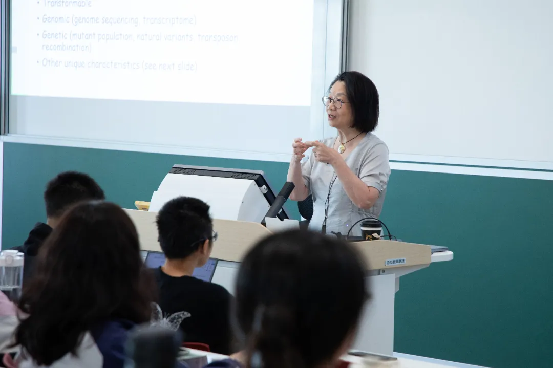

"Last week, while preparing lessons, I was wondering whether to talk about microRNA, because this is the third class of 'Introduction to Life Sciences,' themed 'Model Organisms and Nobel Prizes,' and at that time, microRNA had not yet won the Nobel Prize. " In class, Liu Chongchi told students about her lesson preparation experience: "Unexpectedly, on Monday when the lesson was prepared, suddenly microRNA won the Nobel Prize, my mentor Victor Ambros won the Nobel Prize, so I added this content to this class. ”
First-year undergraduate Wang Zhaoxuan from SUAT, like other students, stared at Liu Chongchi on the podium, listening attentively, occasionally quickly taking notes, afraid of missing any important content.
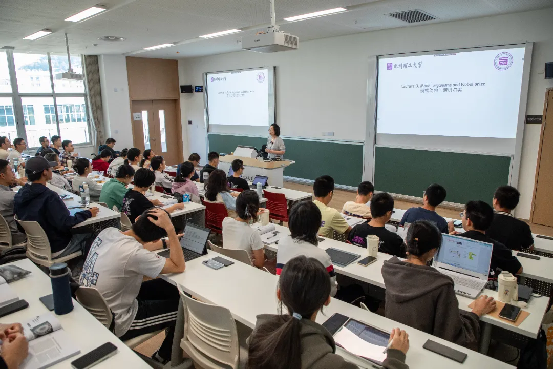
"Ambros worked at Harvard University from 1984 to 1992, engaged in genetics research; at that time, genetic development was a very frontier research field, and I was very interested, so I joined his laboratory and became his first doctoral student. " While introducing model organisms to students, Liu Chongchi also recounted the difficult journey of her mentor's microRNA research. "His laboratory went through very difficult years because his work was very advanced and not valued by peers at the time. "
Ambros mainly studied gene mutations, looking for which genes affect nematode development. In this process, he found a gene lin-4 very strange, not encoding any protein. This was the first discovered microRNA gene, so he did pioneering work. However, because this work was done in nematodes and it was unknown at the time whether this discovery was related to other animals, he did not get tenure at Harvard and had to go to Dartmouth College to continue related research, later moving to the University of Massachusetts Medical School.
Over time, the importance of microRNA gradually became prominent. By 2000, research by Ambros and others finally prevented microRNA from being forgotten in biological archives. They discovered that microRNA exists not only in nematodes but also in humans and plants, a discovery that completely changed the scientific community's understanding of gene regulation.
"The discovery process of microRNA was full of twists and challenges, just as scientific research is not smooth sailing and requires interest, patience, and persistence. " After class, Wang Zhaoxuan shared her feelings.
Making students interested in molecular genetics, synthetic biology, etc., is the original intention of Liu Chongchi leading the design of the "Introduction to Life Sciences" course and one of the important driving forces for her giving up her lifetime full professorship at the University of Maryland in the United States to return to China.
"This course is designed for lower-year undergraduates, aiming to have both depth and breadth, not only allowing students to master basic biology knowledge but also combining frontier synthetic biology directions to stimulate strong interest in synthetic biology. " Liu Chongchi introduced.
In fact
to provide the best teaching for the first-year undergraduates
SUAT carefully equipped the highest-level faculty
for example
↓↓↓
the first lecture of "Introduction to Life Sciences" was delivered by Academician of the Chinese Academy of Sciences and Chair Professor of the SUAT Faculty of Synthetic Biology Kang Le. With the topic "What is Life," using humorous language, rigorous scientific logic, and vivid examples, he explained the mysteries of life sciences in a profound yet accessible way, not only opening the door to understanding life sciences for students but also igniting their enthusiasm and dreams for biology.
To achieve better teaching effects, the course advisory group made full preparations starting from the summer, inviting academicians, global top 2% scientists, and professors with decades of teaching experience as instructors; organizing instructors to conduct multiple rounds of discussions on each course, carefully preparing lessons, and polishing course quality repeatedly; providing first-year undergraduates with opportunities for face-to-face exchanges with high-end talents. Moreover, such exchange opportunities are not only in the classroom but also appear in the university's rich and varied after-class activities, such as "Master Lunch Meetings" and "Talk Shows."
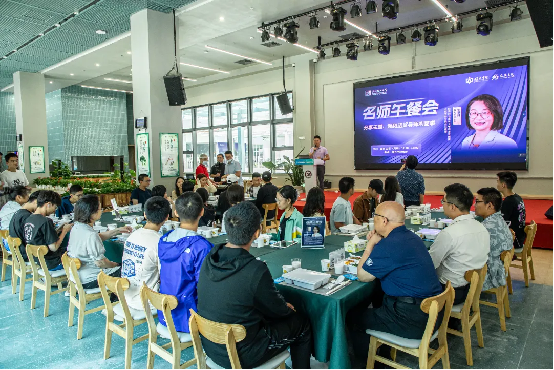
On October 10 at noon, in the Dawning College restaurant, Liu Chongchi had lunch with students from Dawning College and Yuan Geng College, sharing more interesting stories about her and her Nobel mentor. "Master Lunch Meeting" is a traditional brand activity of SUAT residential colleges, having successively invited Nobel laureate Naire and other masters for meal exchanges with students.
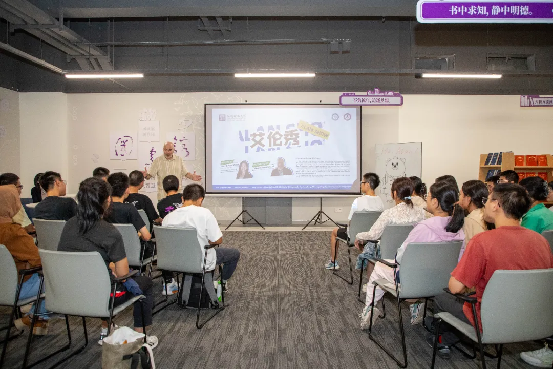
On the afternoon of October 9, Liu Chongchi's husband Alan Kirschner also brought an English talk show to SUAT undergraduates, sharing interesting experiences of living in China, including various fun incidents encountered in the process and how he adapted to the new living environment, with interesting discussions and interactions with students. The event site was full of humor and wit; everyone felt the challenges and fun of cross-cultural adaptation amid laughter, immersively cultivating students' international vision.
Shenzhen University of Advanced Technology(SUAT)
Likes: 47
At the end of today's "Introduction to Life Sciences" class, Liu Chongchi half-jokingly said to students: "My mentor is a Nobel Prize winner, my mentor's mentor is also a Nobel Prize winner, and my mentor's mentor's mentor is still a Nobel Prize winner. Is this hereditary? If it is hereditary, will you inherit it too? "
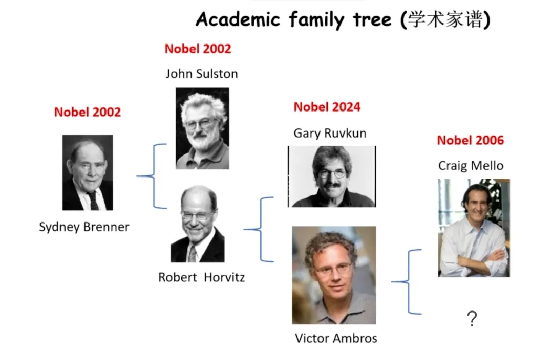
Hearing her say this, students all laughed; these smiles bloomed on youthful faces, hoping that seeds have been planted in their hearts at this moment, quietly waiting to sprout in the future.
 CN
CN