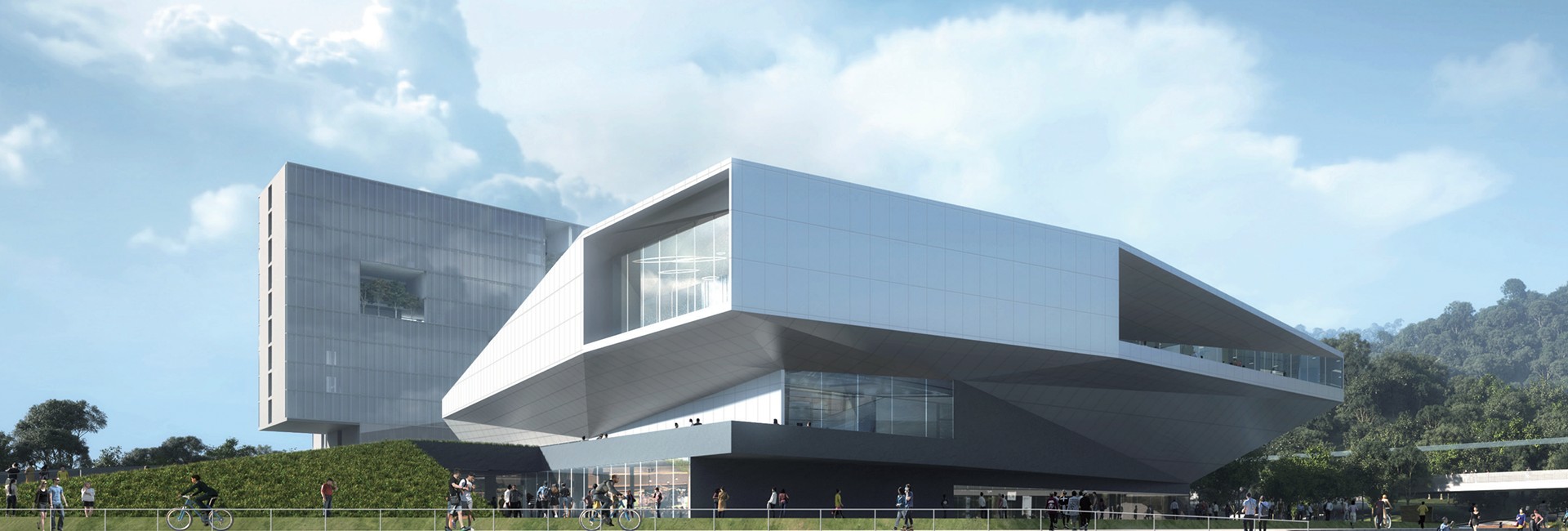
On May 30, Shenzhen University of Advanced Technology (SUAT) launched three distinctive Professional Master's Programs: the "Ocean New Materials Full-Chain Program," the "Magnetic Resonance Full-Chain Program," and the "Virus and Biosafety Full-Chain Program," further strengthening its distinctive approach to integrating science and education.
Leveraging the abundant high-quality resources in science, education, industry, and teaching from top-tier research institutions, SUAT is built with high standards, high levels, rigorous criteria, and superior quality, focusing on deep brain, deep intelligence, life sciences, deep sea, deep earth, and deep space, continuously enriching the integration of science and education.
Previously, SUAT has signed agreements with Nanjing University, Beihang University, Nankai University, and Sun Yat-sen University to jointly train doctoral students. It has also partnered with multiple leading research institutions and technology enterprises to establish a series of distinctive Professional Master's Programs, such as the "RISC-V Chip Design Program" in deep collaboration with the Beijing Open Source Chip Research Institute, and the "BGI Program" in close cooperation with Shenzhen BGI Technology Co., Ltd.
On the same day, SUAT held asigning ceremony for joint training of professional master's students, signing agreements with the Ningbo Institute of Materials Technology and Engineering, Chinese Academy of Sciences; the Innovation Academy for Precision Measurement Science and Technology, Chinese Academy of Sciences; the Wuhan Institute of Virology, Chinese Academy of Sciences; and the Shenzhen Institutes of Advanced Technology, Chinese Academy of Sciences, opening a new chapter in science-education cooperation, complementary advantages, and win-win development.
It is understood that the three Professional Master's Programs—"Ocean New Materials Full-Chain Program," "Magnetic Resonance Full-Chain Program," and "Virus and Biosafety Full-Chain Program"—will rely on national major scientific and technological projects to cultivate high-level talents with both original innovation capabilities and engineering practice abilities, produce high-level research outcomes, and serve major national strategies as well as local socioeconomic development.
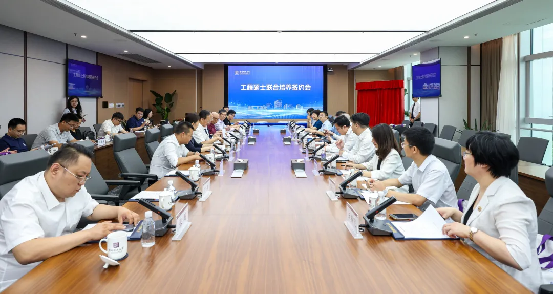
SUAT President Fan Jianping stated that the university's distinctive features include "running the university through integration of industry and education as well as science and education, building interdisciplinary programs, and cultivating talents through the integrated model of three academies (faculty, research institute, and residential college)," promoting the coordinated development of education, technology, and talent as a trinity. In the future,the university and its partners will engage in in-depth cooperation on tackling key scientific and technological projects, cultivating top innovative talents, and building disciplines and programs. This not only further broadens the scope of science-education cooperation, allowing research strengths and educational resources from different regions and fields to fully integrate, but also aligns with the needs of the times and the nation, enabling united efforts to contribute to building a strong nation in education, science and technology, and talent.
As a new-type research university, SUAT shoulders the mission of exploring innovative development paths for China's higher education. This signing is another major initiative by SUAT to implement its distinctive approach to integrating science and education. Moving forward, SUAT will continue to explore diverse joint training models, working with partners tojointly cultivate top innovative talents, tackle key core technological challenges, and provide strong support for national innovation-driven development and the strategy to build a strong nation in talent.
 CN
CN