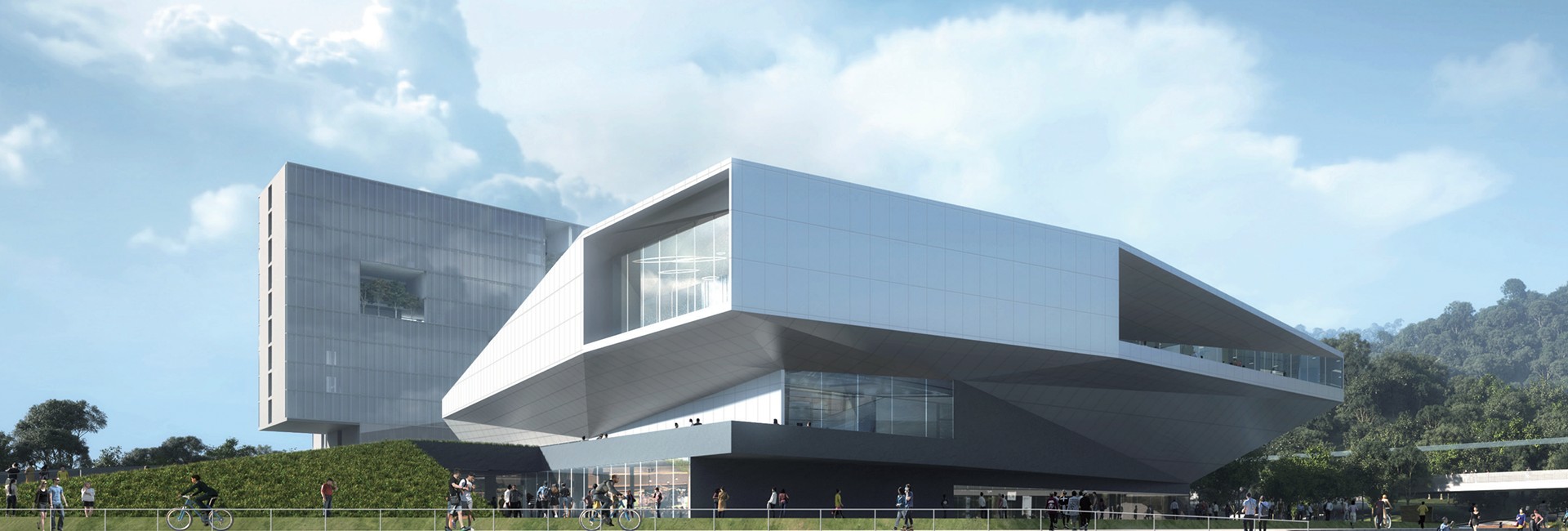
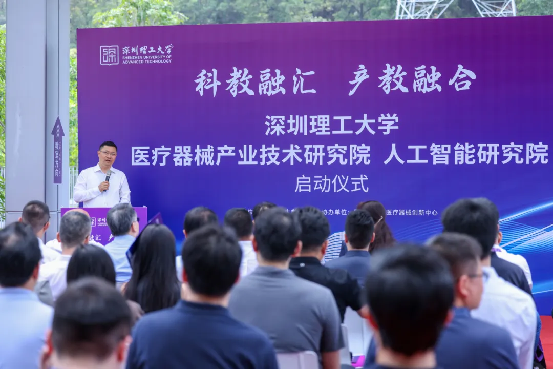
On May 8, theMedical Device Industry Technology Research Institute (hereinafter referred to as the "Medical Device Research Institute") and the Artificial Intelligence Research Instituteat SUAT were officially launched.
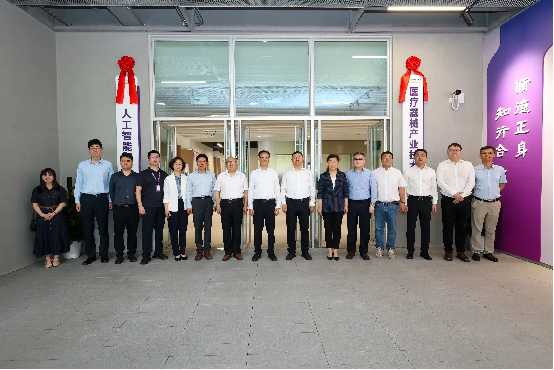
The Medical Device Research Institute is jointly built by SUAT and the National Innovation Center for High-Performance Medical Devices (hereinafter referred to as the "National Innovation Center"). It serves as the main entity for applied basic research and key technology R&D in biomedical engineering at SUAT and will be developed into a national-level innovative talent cultivation base, a supporting force for first-class discipline construction, and an important platform for technological innovation and industrial translation.
The Artificial Intelligence Research Institute focuses on promoting scientific research innovation and talent cultivation in artificial intelligence, with four research centers: Intelligence and Behavior Intersection, Large Models, AI Perception and Cognition, and Evidence-Based Medicine and Artificial Intelligence. Each center conducts in-depth research closely around core areas of artificial intelligence, aiming to solve key industry problems and cultivate high-quality AI professionals.
The research institutes are important bases for SUAT to cultivate interdisciplinary composite talents, primarily planned and built around national strategic needs and Shenzhen's "20+8" industrial cluster policy. SUAT has previously established the Institute of Cell and Gene Technology, the Future Agriculture Research Institute, and the Higher Education Research Institute. In the future, it will build a batch of new-type research institutes such as the Intelligent Robotics Research Institute and the Future Medicine Center, implementing institutionalized and organized research to promote scientific research and technological innovation, and cultivate top innovative talents to meet the needs of developing new quality productive forces.
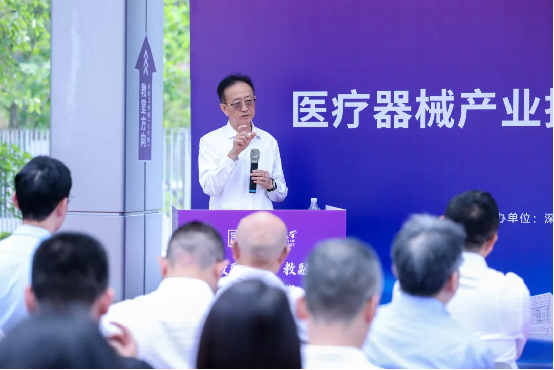
Address by SUAT President Fan Jianping

SUAT President Fan Jianping stated that, as a new-type research university, SUAT is taking new steps in interdisciplinary integration and institutionalized research with the spirit of"venturing into uncharted territories and scaling the highest peaks."The university actively practices the concept of "integration of industry and education as well as science and education," innovates management structures, and builds a talent cultivation system integrating "faculty, research institute, and residential college," where research institutes focus on research. They not only provide students with opportunities to engage in cutting-edge research but also shoulder the mission of injecting vitality into Shenzhen's industries. "In the future, SUAT will collaborate more with these advantageous enterprises and national-level industrial platforms, attracting more industries to converge in Guangming District and injecting new momentum into regional development. "
Address by Zheng Hairong, Academician of the Chinese Academy of Sciences,
Director of the National Innovation Center, and Vice President of Nanjing University
Zheng Hairong, Academician of the Chinese Academy of Sciences, Director of the National Innovation Center, and Vice President of Nanjing University, stated that the state has put forward important requirements for building high-level universities: cultivating top innovative talents, achieving breakthroughs in science and technology, and serving national and socioeconomic development, emphasizing the use of frontier scientific breakthroughs to drive educational transformation. Shenzhen, with its unique advantages in technology industries and innovation culture, has become an ideal fertile ground for nurturing innovative achievements."We hope these two research institutes will play an important role in the construction process of SUAT, effectively promoting the university's high-quality development, enhancing its educational standards and academic influence, and cultivating more top innovative talents with both innovative spirit and practical abilities for the nation. "
The launch of these two research institutes will further integrate the university's research resources, gather elite talents from all sides, strengthen close cooperation with industry, and facilitate the translation of scientific and technological achievements. In the future, SUAT will continuously deepen the integration of industry and education as well as science and education, boldly scale technological peaks, and write a new chapter in scientific and technological innovation.
Attendees at the launch ceremony included Cai Lanbo, former Chief Engineer of the Management Office of the Chinese Satellite Navigation System; Wang Hui, Deputy Party Secretary of SUAT; Zhao Wei, Provost of SUAT; Huang Wei, Director and First-Level Investigator of the Social Development Science and Technology Division at the Shenzhen Science and Technology Innovation Bureau; Zhuang Yuan, Deputy Director of the Guangming District Science and Technology Innovation Bureau; Yang Fan, Assistant to the President and Minister of Education Affairs at SUAT; Tang Jinling, Lifetime Chair Professor in the College of Computing Science and Control Engineering at SUAT and Director of the Evidence-Based Medicine and Artificial Intelligence Center at the Artificial Intelligence Research Institute; Liu Xin, Dean of the Medical Device Industry Technology Research Institute at SUAT and Chairman of the National Innovation Center for High-Performance Medical Devices; and Liu Zhiyuan, Director of the Intelligence and Behavior Intersection Research Center at the Artificial Intelligence Research Institute of SUAT.
 CN
CN