https://mp.weixin.qq.com/s/l4FzSIl8xZ7s3AQ1pcusdw
Nature Communications | Professor Bai Yang from Shenzhen University of Advanced Technology and Fudan University team achieve higher efficiency and durability in perovskite solar cells

When we talk about clean energy, solar power is definitely the "star player." But how to make solar cells both efficient and stable has always been a challenge that scientists are striving to overcome.
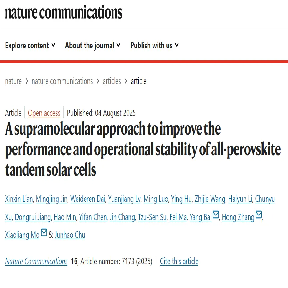
On August 4, Professor Bai Yang from Shenzhen University of Advanced Technology, in collaboration with Academician Chu Junhao’s team from Fudan University, published their findings inNature Communications. They successfully developed ultra-stable, high-efficiency wide-bandgap perovskite solar cells and constructed high-performance all-perovskite tandem devices based on this breakthrough.
The photoelectric conversion efficiency of this all-perovskite tandem device reaches 28.44%, with a certified efficiency of 27.92% by the Guangdong Institute of Metrology. This research not only fully demonstrates the innovative strength of Shenzhen University of Advanced Technology in the field of new energy materials, but also provides a new approach to solving the dilemma of balancing stability and efficiency in wide-bandgap perovskite materials, while laying a key material foundation for the next generation of ultra-efficient, low-cost solar power technology.
“Molecular engineering” approach:
Ether-ring supramolecules stabilize perovskite
Part.1
Speaking of the "potential stock" in the current solar cell field, perovskite materials are definitely on the list. It has low cost and strong photoelectric conversion capability, and is considered the core material for the next generation of solar technology.
The wide-bandgap perovskite Cs₀.₃FA₀.₆DMA₀.₁Pb(I₀.₇Br₀.₃)₃ (1.77 eV bandgap) targeted in this study, however, has a frustrating “weakness”: It is inherently unstable. This material inherently has the potential for efficient photoelectric conversion, but in its crystal structure, ions easily "run around," forming vacancy defects; under light, it is also prone to "halide phase separation"—like well-mixed pigments suddenly separating, directly affecting power generation efficiency and even losing practical value.
How to make perovskite both efficient and stable? The team came up with an innovative strategy: inviting a "molecular engineer"—ether ring supramolecule (crown ether), which can achieve effective control of crystallization kinetics through precise regulation of the coordination between halides and monovalent cations as well as lead ions, making the crystal structure more stable. At the same time, halide phase separation under light is effectively suppressed, allowing energy to be efficiently converted into stable electrical output.
How strong is the performance? The data speak for themselves!
Part.2
Wide-bandgap perovskite solar cells prepared based on this supramolecular engineering strategy exhibit excellent performance:
1
Outstanding photoelectric conversion efficiency: Single-junction wide-bandgap devices based on this technology achieve a photoelectric conversion efficiency of 21.01%, at the forefront of similar studies;
2
Excellent operational stability: In maximum power point tracking tests, after continuous operation for 1000 hours, the battery efficiency can still maintain 95% of the initial value—this means it can work stably for a long time without frequent replacement;
3
High efficiency of tandem devices: The two-terminal all-perovskite tandem solar cell constructed based on this technology achieved a photoelectric conversion efficiency of 28.44% (certified efficiency 27.92%)
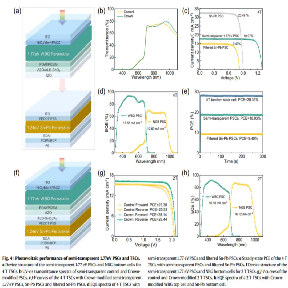
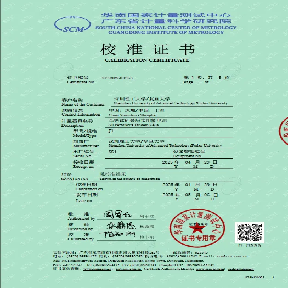
Certified photoelectric conversion efficiency by Guangdong Institute of Metrology reached 27.92%
Why is this technology so impressive?
Part.3
1
Precise regulation:Through the "tacit cooperation" between crown ether molecules and perovskite precursors, precise control of the crystallization process is achieved;
2
Multiple stabilization mechanisms:Solving multiple issues such as thermal stability, light stability, and phase stability at once, equivalent to adding "multiple insurances" to the battery;
3
Industrialization potential: The preparation process is simple and easy for large-scale production—this means it is expected to leave the laboratory in the future and truly enter our lives.
How solar energy will change lives in the future
Part.4
This research is not just a breakthrough in the laboratory; it is more likely to change our energy landscape and usher in a new era of ultra-efficient solar power generation!
1
Power plants become more efficient: Large-scale solar power stations using it will have lower power generation costs, making clean energy more competitive;
2
Rooftop photovoltaics become more practical: Provide high-performance, long-life power generation modules for distributed photovoltaic systems (such as rooftop solar);
3
Charging becomes more convenient:Provide lightweight, high-efficiency solar charging solutions for new energy vehicles, portable electronic devices, etc.;
4
Excellent operational stability: In maximum power point tracking tests, after continuous operation for 1000 hours, the battery efficiency can still maintain 95% of the initial value—this means it can work stably for a long time without frequent replacement;
As the technology continues to optimize and industrialize, it may become an important helper for the world in addressing climate change and achieving the "carbon neutrality" goal.
Shenzhen University of Advanced Technology’s new energy materials research demonstrates strong capability
Part.5
As a new research-oriented university, Shenzhen University of Advanced Technology has shown strong development momentum in the field of new energy materials. Professor Bai Yang’s team has a strong research foundation and extensive innovative experience in perovskite solar cell technology. This breakthrough further solidifies Shenzhen University of Advanced Technology’s leading position in the field.
Notably, Master student Jin Mingjing, jointly cultivated by Shenzhen University of Advanced Technology (SUAT) and University of Science and Technology of China, participated in this research as a co-first author. This achievement is not only an important progress in academic research, but also reflects Shenzhen University of Advanced Technology (SUAT)'s firm exploration and unremitting efforts in serving national strategic needs and continuously promoting scientific and technological innovation.
Professor Bai Yang from Shenzhen University of Advanced Technology and Professors Zhang Hong and Mo Xiaoliang from Fudan University are the co-corresponding authors of the paper; Xinxin Lian from Fudan University and Mingjing Jin from Shenzhen University of Advanced Technology are the co-first authors of the paper.
Paper Link: https://www.nature.com/articles/s41467-025-62391-9#author-information
 CN
CN