From July 26 to 29, the 18th Q-Bio International Conference on Quantitative Biology (hereinafter referred to as the "Q-Bio Conference") was held at the Shenzhen Guangming Yungu International Conference Center. More than 230 researchers from the United States, the United Kingdom, India, and other countries gathered for this grand event, deeply discussing the development prospects and potential opportunities in quantitative biology and synthetic biology around the theme "Quantitative Laws and Predictable Models of Complex Life Systems."
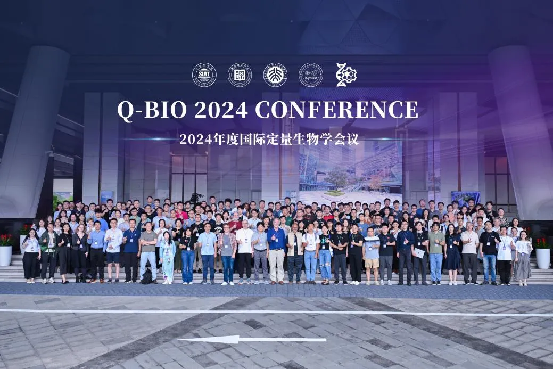
▲ Group Photo of Participants
This conference was jointly sponsored by the Shenzhen Institutes of Advanced Technology, Chinese Academy of Sciences;Shenzhen University of Advanced Technology (SUAT); Peking University; the Shenzhen Institute of Synthetic Biology Innovation; and the Shenzhen Synthetic Biology Association, among others.
Following the successful hosting of the 17th conference, the Q-Bio Conference was held in Shenzhen again this year. The local organizing committee was led by Researcher Liu Chenli, Deputy Director of the Shenzhen Institutes of Advanced Technology, Chinese Academy of Sciences, and Dean of the Shenzhen Institute of Synthetic Biology Innovation.
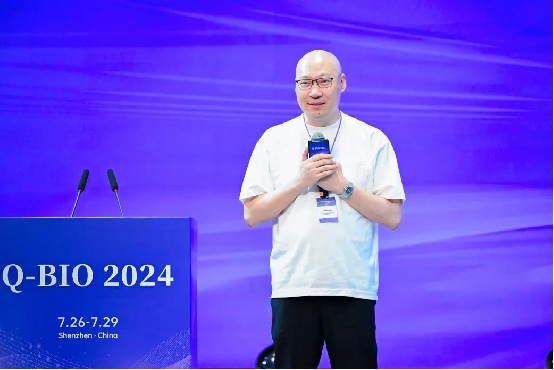
At the beginning of the conference, Liu Chenli stated in his speech that he thanked the Q-Bio International Organizing Committee for choosing Shenzhen again this year—a city known as "China's Silicon Valley" and renowned for technological innovation—and the conference venue, Guangming Science City, is rapidly developing into a national center for scientific research and technological innovation. The Shenzhen Institutes of Advanced Technology encompass 9 institutes, focusing on the intersection of information technology (IT) and biotechnology (BT). Among them, quantitative synthetic biology is flourishing, the academic community is rapidly expanding, and a large-scale highland for science, education, and industry has been built. This year, relying on the research and industry-education resources of the Shenzhen Institutes of Advanced Technology, SUAT was officially established in Guangming District as a new-type research university. We hope everyone enjoys and deeply participates in this transformative journey of Q-Bio 2024, exploring new frontiers in quantitative biology together.
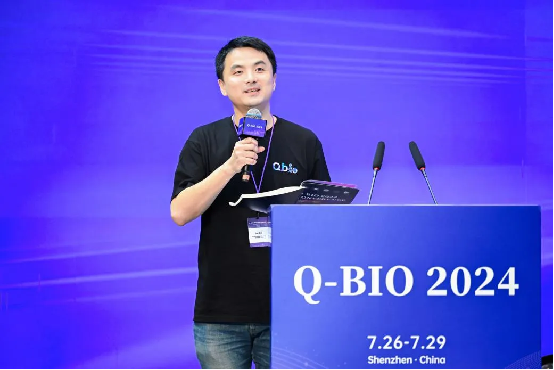
The conference was hosted by Researcher Dai Lei from the Shenzhen Institutes of Advanced Technology. He introduced that the Q-Bio Conference provides a platform for global quantitative biology experts and young scholars to discuss frontier progress in the discipline and promote interdisciplinary international cooperation, expecting attendees to jointly promote the sharing of knowledge and resources, advance technological innovation, and collectively address global scientific research challenges.
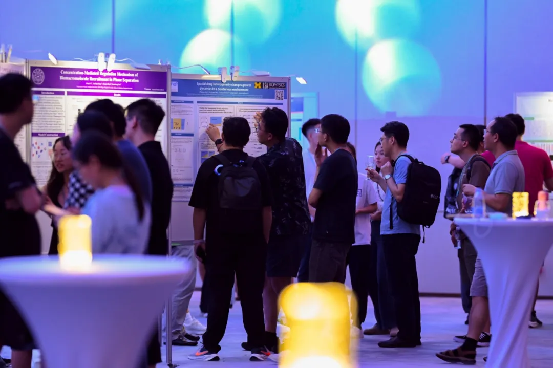
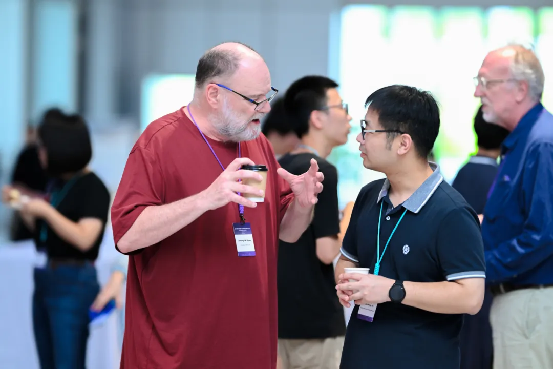
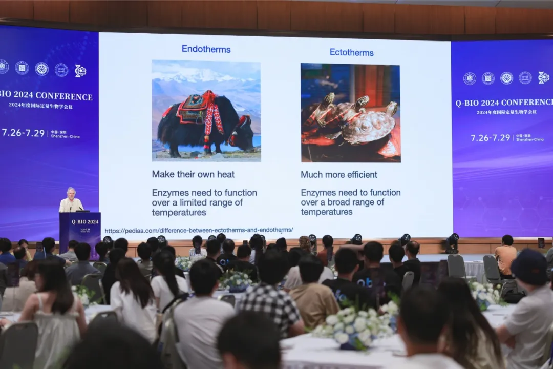
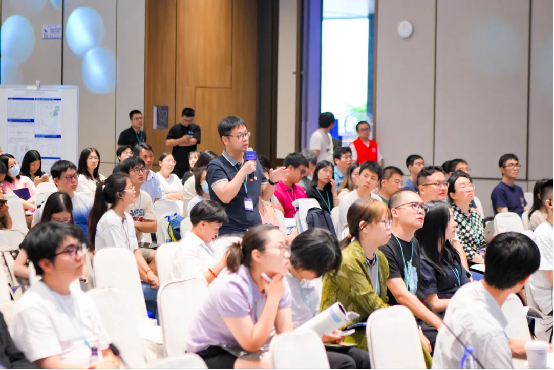
On site, the speakers shared on frontier topics such as synthetic biology, systems biology, artificial intelligence, aging, tumors, molecular evolution, and microbiomes, covering the latest research achievements as well as future development directions and potential application prospects in their respective fields. The on-site response was enthusiastic, with interdisciplinary questions and exchanges adding a strong academic atmosphere to the entire conference.
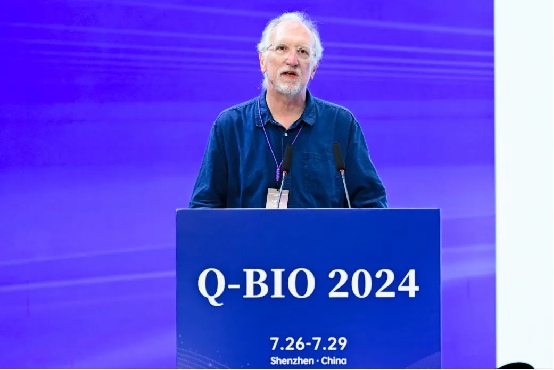
Special guest Professor James E. Ferrell from Stanford University, USA, highly praised the richness of the speech themes at this conference. He proposed that how researchers can predictively design behaviors in genetic circuits remains an unresolved issue. The conference provided valuable knowledge and inspiration for scholars who prefer quantitative methods, looking forward to the future direction of quantitative biology.
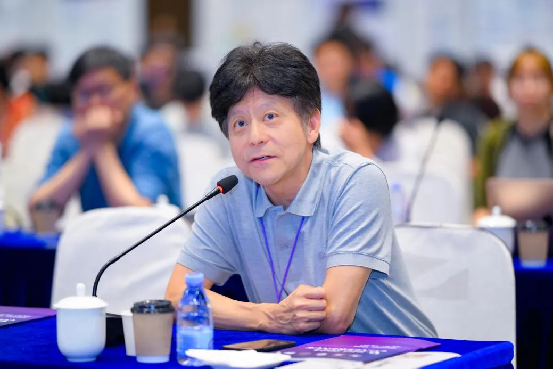
"Shenzhen has shown extremely high vitality in the field of quantitative biology! " Academician of the Chinese Academy of Sciences and Chair Professor at Westlake University Tang Chao believes that Shenzhen is gradually becoming a central city for international exchanges in frontier technology fields such as quantitative biology and synthetic biology, hoping that more young scholars can engage in interdisciplinary cooperation, maintain active thinking, and pursue careers they find meaningful and passionate about in a free and open academic atmosphere.
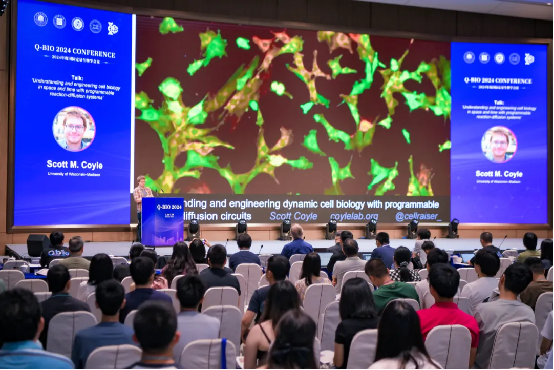
Assistant Professor Scott M. Coyle from the University of Wisconsin-Madison Coyle stated that quantitative methods transform biology from an observation-based science into a tool with true predictive capabilities that helps people understand life systems. Through this opportunity, he saw the Shenzhen Synthetic Biology Infrastructure under construction in Shenzhen and a series of ongoing frontier projects, giving him an inspiring feeling that "the future is here."
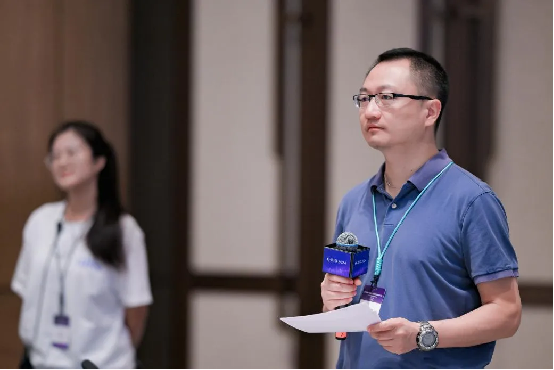
Wei Ping, a member of the conference organizing committee and researcher at the Shenzhen Institutes of Advanced Technology, stated that quantitative biology, as a frontier interdisciplinary field for studying complex biological systems, urgently needs extensive and efficient international cooperation to gather global wisdom and jointly promote solutions to major scientific problems in quantitative biology. The development of quantitative biology will promote breakthroughs in multidimensional precise measurement, computational and mathematical tools, essential theories of life processes, high-throughput standardized data, etc., in complex life systems, helping to understand the design principles of complex functions in life systems from principles and promoting the development from understanding life to designing life.
Q-Bio 2024 CONFERENCE
It is understood that the Q-Bio Conference was jointly initiated in 2007 by research teams from Los Alamos National Laboratory and the University of New Mexico, has been successfully held 18 times worldwide, and enjoys high reputation and wide influence in fields such as biophysics and systems biology. It is reported that this conference will cooperate with the journal Quantitative Biology to open a special issue, and all accepted papers from the conference will have the opportunity to be published in open access mode.
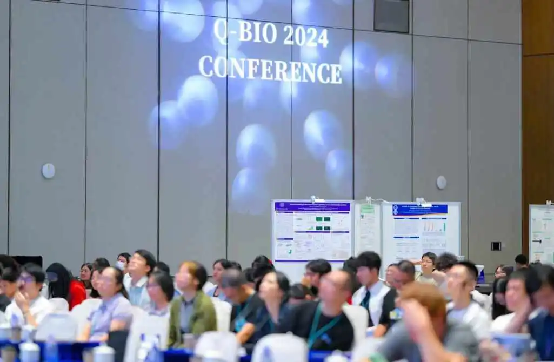
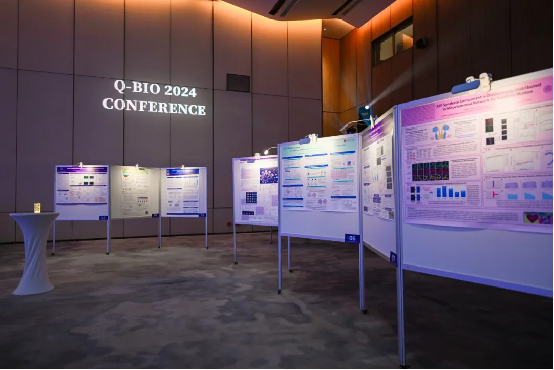



The successful conclusion of Q-Bio2024 highlights Shenzhen's layout and vision in global scientific research cooperation, particularly in quantitative synthetic biology. As a frontier interdisciplinary discipline, quantitative biology provides powerful tools for revealing the design principles and operational laws of biological systems through its advanced measurement methods and theoretical modeling. This conference showcased Shenzhen's image as an open window and frontier technology city, conducted in-depth discussions on major issues of national strategic needs and scientific frontiers, promoted source innovation and frontier interdisciplinarity, and injected new momentum into Shenzhen's strategic goal of building a highland for synthetic biology.
 CN
CN